Curating Ancient American Artifacts
Research Source Material

Why use DNA?
Why use Anthropology?
Why use Anthropology?
DNA is a complex molecule that carries the genetic instructions used in the development, functioning, growth, and reproduction of all known living organisms.
Since DNA is found in all living organisms, it can be used to map the genetic connections between living organisms.
DNA is also retained in fossils. Once a living organism dies, its genetic footprint is also fossilized.
So the fossilized DNA can be used to map the genetic connections of fossilized organisms and living organisms.
Why use Anthropology?
Why use Anthropology?
Why use Anthropology?
Anthropology is the scientific study of humanity, encompassing all human cultures throughout history and the biological and evolutionary aspects of human beings.
Since Anthropology is the study of all of humanity since our inception as a species, it can be used to study the earliest members of our species and their cultures, lifestyles, habits, and ways of life.
Anthropology is an integral part of ancestral research because it gives us a chance to observe our ancestors using the information they left behind for us.
Why use Genealogy?
Why use Anthropology?
Why use Archaeology?
Genealogy is the study of families, tracing their lineages, ancestry, and the kinship relationships between individuals across generations.
Since Genealogy is about tracing an individual's family lineage, the information found and retained is personal and unique to each family.
Genealogy is generally the first place an individual starts in their research journey.
By acquiring family records, photos, and heirlooms, we are able to make tangible connections between ourselves and our most recent ancestors.
Why use Archaeology?
Why use Anthropology?
Why use Archaeology?
Archaeology is the scientific study of past human life and activities through the recovery and analysis of material remains.
These remains, known as artifacts, include tools, pottery, jewelry, buildings, and other objects left behind by humans, as well as biological materials like animal bones and plant remains.
Archaeology is a useful aspect of ancestral research because it gives us a chance to observe our ancestors using the materials they left behind for us.
Researching Ancient American Anthropology

Discovering Ancient Mayan Social Structures

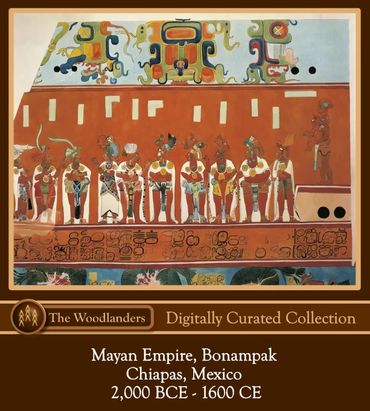
The Ancient Mayans used a social structure that valued each class for its unique contributions to the success of a settlement.
Each settlement had a high priest who was usually male.
The high priest's immediate family served as his council.
Both men and women of the council served as spiritual priests and priestesses for the settlement.
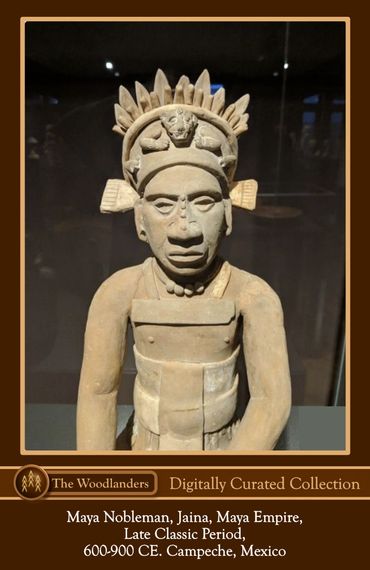
Nobles included scribes, record keepers, and non-immediate
family members who served as minor leaders of the settlement.
Merchants and artisans crafted wares of all kinds and sold them at the settlement's market each day.
Agronomists, hunters, guards, and laborers were the backbone
of each settlement and provided the entire settlement with food, protection, and other vital services.